
Your Business Grew. Has Your Leadership Grown With It?
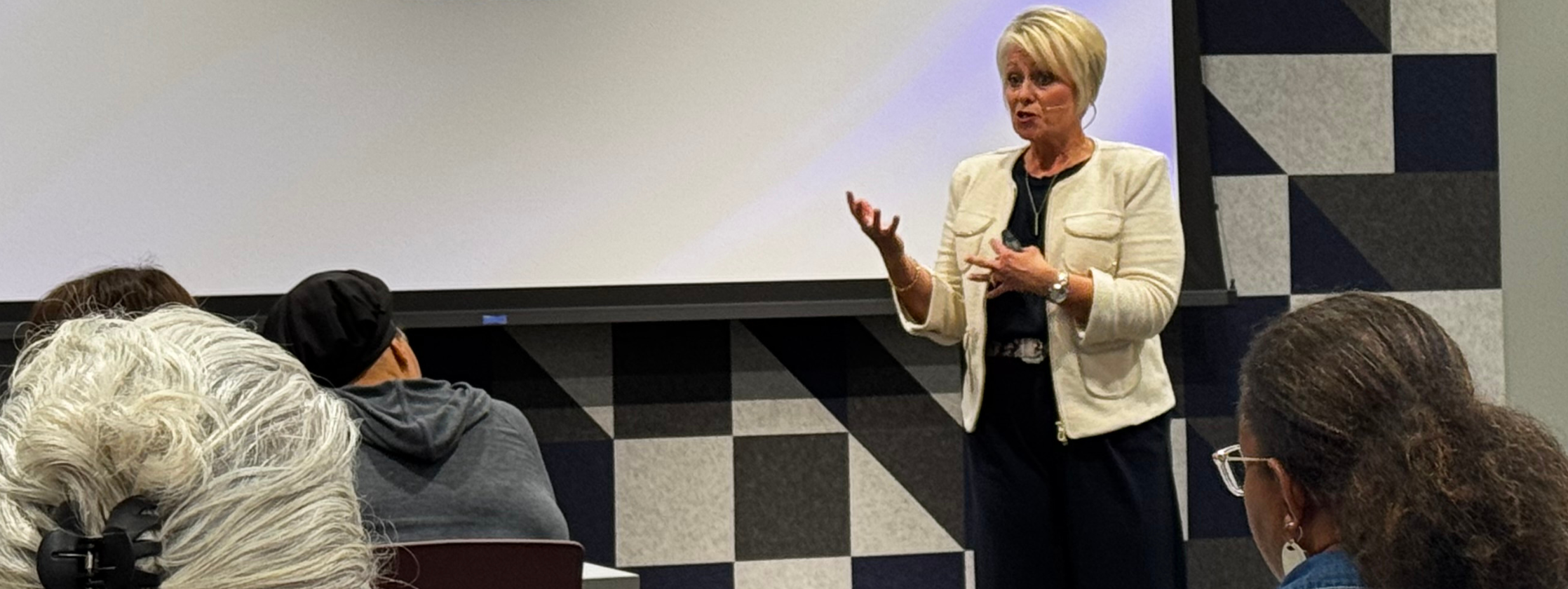
Kelli Risse | Peak Performance Leadership Coach and Speaker
You have built a successful business. You have good people, loyal clients, reliable systems, and growing revenue. From the outside, it looks like things are working.
But behind the scenes, you are still answering questions your team should be able to answer. You are chasing information that should have been brought to you. You are stepping in when something gets missed because letting it go feels too risky.
And you are probably wondering, “Why am I still this involved?”
You have hired people. You have created processes. You have explained what you need, probably more than once.
Yet somehow, everything still comes back to you.
It’s Not Just a Delegation Problem
You already know the textbook advice.
Delegate more. Develop your leaders. Step back and let your team do their jobs.
Knowing you need to delegate is not the problem. You probably know exactly what should come off your plate.
The problem is that knowing what you should let go of does not automatically change the hidden patterns that keep putting it back there.
You delegate something, but when it is not done the way you would do it, you fix it yourself. You tell yourself it is faster. And honestly, sometimes it is.
You want your team to take more ownership, but every time something goes wrong, you step in and take care of it.
That is where things get complicated.
Five Hidden Patterns Keeping You in the Middle
I see these patterns all the time with the business owners I coach.
1. You overfunction.
You do something yourself because explaining it, checking on it, and waiting for it to be finished feels like more work than simply handling it.
2. You control the outcome.
You delegate the work, but when it is not done exactly the way you would have done it, you revise it or redo it yourself.
3. You rescue.
The moment someone struggles, you step in and solve the problem. You mean to be helpful, but you may be taking away the opportunity for that person to figure it out.
4. You avoid.
You put off a difficult conversation about an expectation, a performance problem, or a role that is not working. In the meantime, you compensate for the problem yourself.
5. You second-guess.
You revisit decisions your team has already made because you do not fully trust the outcome until you have reviewed it yourself.
These patterns are easy to miss because they often look like responsible leadership. You care about the business, notice what other people miss, know how to solve problems, and when you step in, things get done.
In the moment, it feels helpful. Over time, however, it teaches your team a very different lesson:
Check with her first.
Once that message becomes part of the culture, people start hesitating before making decisions. Problems stay hidden until they become urgent. Capable employees wait for direction instead of taking ownership. Your strongest people become frustrated because they have responsibility without the authority to act.
Meanwhile, you are exhausted because everyone is still looking to you.
You can clarify roles, set up systems, and tell people you want them to take more ownership. But none of that will matter if their experience has taught them to check with you first.
The Business Grew, but Your Leadership Hasn’t Caught Up Yet
A business can grow beyond the owner’s leadership capacity for a while. In fact, that is often when the strain really starts to show.
Decisions slow down because everyone is waiting for you. Employees become frustrated because they are not sure what they can decide without your approval. Important details get missed because people assume you will catch them. Work gets duplicated because you keep checking or redoing what someone else already handled.
And you are carrying far more than you should be carrying at this stage of the business.
Leadership capacity is not about finding a few more hours in your week. It is about being able to lead a larger business without personally doing, fixing, deciding, and catching everything.
If too much of the business still runs through you, growth will eventually bump up against the limits of what you can personally manage.
Not because you are incapable of more.
Because you were never supposed to carry all of it by yourself.
What This Looks Like in Real Life
One business owner I work with had capable people in key leadership roles, but she still felt like she was carrying the entire business on her back.
She was tired, frustrated, and starting to wonder why she seemed to be the only one working this hard or noticing what needed to be done.
But here was the uncomfortable part. Every time something went wrong, she stepped in and handled it. She wanted her leaders to take greater ownership, but she had also taught them that she would catch whatever they missed.
That was not easy to see. It was even harder to stop.
The work was not simply to delegate more. She had to change what she carried, what she expected from her leadership team, and how she responded when they brought her a problem.
Her leaders needed to raise concerns sooner, take greater ownership, and bring possible solutions instead of waiting for her to determine the next move. She needed to stop quietly managing responsibilities they were supposed to carry.
As she began leading differently, they started taking greater ownership of decisions, risks, and solutions.
She was still involved in the business. She just was not carrying all of it alone.
Your Team Cannot Carry What You Keep Taking Back
Many business owners say they want their team to take more ownership, yet they remain involved in everything.
Your team cannot take ownership of responsibilities you keep taking back.
They cannot become confident decision-makers if you regularly override their decisions. They cannot learn to solve difficult problems if you step in as soon as they struggle. And they cannot meet expectations you have never clearly stated because you are avoiding an uncomfortable conversation.
This does not mean you ignore mistakes, lower your standards, or let important things fall apart.
It means you respond differently.
When someone brings you a problem, ask, “What do you recommend?”
When the work is not meeting your expectations, explain what needs to improve instead of quietly fixing it yourself.
When someone makes a mistake, help them understand what happened and what they will do differently next time.
When a difficult conversation needs to happen, have it before you become resentful and the rest of the team starts feeling the consequences.
Your role is not to make sure no one ever struggles.
Your role is to help your people become capable of handling more without you.
Stop Asking How to Delegate More
Instead of asking, “How do I delegate more?” ask yourself:
What pattern of mine is quietly telling my team to keep checking with me first?
That question shifts the focus from what your team is doing to what you may be doing without realizing it.
It helps you see what you are still controlling, avoiding, rescuing, second-guessing, or taking back. It explains why responsibilities that should have left your plate keep finding their way back.
The next stage of growth probably does not require another productivity system or another list of tasks to delegate.
It requires you to change the patterns that keep putting you back in the middle of everything.
Before you can lead a bigger business, you have to become the leader capable of leading it.
Are You Still in the Middle of Everything?
If your business has grown but everything still seems to find its way back to you, another delegation system may not be the answer.
A hidden pattern may be affecting what you trust, control, avoid, rescue, or take back.
Learn more about my One-Day Breakthrough Experience and executive coaching, or schedule a complimentary strategy call to identify what is keeping you in the middle and what needs to change so you can lead the next stage of growth.
What is one responsibility your team technically owns but that still regularly finds its way back to you? Share your experience in the comments.
About Kelli Risse
Kelli Risse is a peak performance business coach, leadership speaker, and author of the Succeed With Ease series. She helps women who own growing businesses identify and change the hidden patterns keeping them stuck in the middle of everything so they can expand their leadership capacity, grow their businesses, and succeed with ease.